- Electro Voice Speaker Serial Numbers
- Electro Voice Speakers Website
- Electro Voice Microphone Serial Numbers
- Electro Voice Parts
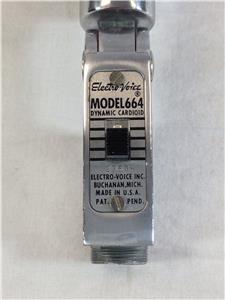
The serial numbers from these years were duplicated in 1963, 1964, 1965, and 1965, respectively. Taking the example Super Echo Twin above, its serial number alone could denote April 1954 or April 1964. A Mercury with serial number 009054 could be from September 1960 or it could be from the second serial number system implemented in 1965. Re: Leslie Speaker Serial Numbers Just been checking my cabs for bit more info, just got new 147 with number FB13575, checking motor unit inside cabinet has number on it 7245, meaning made 45th week 1972, so that puts cab as late 72 or 73. Also big lowrey that was connected toleslie dated from 1973 according to sticker on back.
Electro Voice Speaker Serial Numbers

Electro Voice Speakers Website
Electro-Voice Timeline: 1927 – 2001. 1927: Al Kahn and Lou Burroughs found Radio Engineers in the basement of the Century Tire & Rubber Company, South Bend, Indiana. Company focus is radio retail, service and repair. Within a year, it is the largest radio service shop in the city. The Patrician 700 was EV's flagship system in early 1960's comprised of a four way 16Ω speaker system enclosed in a beautiful full 1 inch Douglas Fir plywood corner type cabinet. This pair contains very early consecutive serial numbers 11552 & 11553. Also included is.
From its humble beginnings, the company has evolved. Some of its 'milestones' are:
1927 The company was founded by Al Kahn and Lou Burroughs in the basement of the Century Tire and Rubber Company in South Bend, Indiana as Radio Engineers.
1930 Kahn and Burroughs develop a public address system for Knute Rockne, the football coach at Notre Dame University. Rockne uses the system to address his team during drills on 4 adjacent fields. He calls the system his 'Electric Voice.'
1934 EV invents the hum-bucking coil, allowing microphones to be used close to lights and other electrical devices without hum. This design element is still used by nearly every company today.
1940 Electro-Voice introduces the noise-cancelling microphone to the military, which revolutionizes tank and aircraft communications. In the aftermath of World War II, the company is awarded a Congressional Citation for this important contribution to the war effort.
1954 EV introduces Variable-D microphone technology, a means of minimizing the up-close bass boost inherent in single-D directional microphones. Variable-D improves vocal intelligibility for live sound, recording and broadcast applications.
1957 EV invents the stereo magnetic phono cartridge.
1963 EV receives an Academy Award---the first ever for an audio product---from the Academy of Motion Picture Arts and Sciences for the development of the 642 Cardiline shotgun microphone. This product significantly advances the quality of sound on film.
1970 EV becomes the first company to widely adopt the philosophy of Australian physicists Thiele and Small and use vented low-frequency enclosures. Enclosures built using these criteria have deeper bass response and lower distortion than horn designs and higher sensitivity than sealed systems.
1974 Electro-Voice develops constant-directivity (CD) horns, which allow a loudspeaker to maintain its coverage angles over a wide frequency range with more uniform sound quality.
1986 EV revolutionizes concert sound reinforcement by introducing Manifold Technology. Manifold Technology allows the combining of the outputs of multiple drivers into a single horn or low-frequency enclosure without destructive interference. The result is a physical package that is a fraction of the size with much greater acoustic output capability.
1997 EV invents Ring-Mode Decoupling (RMDTM), a revolutionary approach to minimizing acoustical and mechanical resonances in loudspeakers. Speaker systems with RMD have improved clarity and resolution, especially in the vocal range.
2000 EV introduces VOBTM technology, an innovative mechanical design that significantly reduces proximity effect and improves vocal intelligibility in single-D microphones.
2000 EV introduces ClearScan wireless technology that enables automatic scanning and selection of UHF channels.
Electro Voice Microphone Serial Numbers

Electro Voice Parts
From its humble beginnings, the company has evolved. Some of its 'milestones' are:
1927 The company was founded by Al Kahn and Lou Burroughs in the basement of the Century Tire and Rubber Company in South Bend, Indiana as Radio Engineers.
1930 Kahn and Burroughs develop a public address system for Knute Rockne, the football coach at Notre Dame University. Rockne uses the system to address his team during drills on 4 adjacent fields. He calls the system his 'Electric Voice.'
1934 EV invents the hum-bucking coil, allowing microphones to be used close to lights and other electrical devices without hum. This design element is still used by nearly every company today.
1940 Electro-Voice introduces the noise-cancelling microphone to the military, which revolutionizes tank and aircraft communications. In the aftermath of World War II, the company is awarded a Congressional Citation for this important contribution to the war effort.
1954 EV introduces Variable-D microphone technology, a means of minimizing the up-close bass boost inherent in single-D directional microphones. Variable-D improves vocal intelligibility for live sound, recording and broadcast applications.
1957 EV invents the stereo magnetic phono cartridge.
1963 EV receives an Academy Award---the first ever for an audio product---from the Academy of Motion Picture Arts and Sciences for the development of the 642 Cardiline shotgun microphone. This product significantly advances the quality of sound on film.
1970 EV becomes the first company to widely adopt the philosophy of Australian physicists Thiele and Small and use vented low-frequency enclosures. Enclosures built using these criteria have deeper bass response and lower distortion than horn designs and higher sensitivity than sealed systems.
1974 Electro-Voice develops constant-directivity (CD) horns, which allow a loudspeaker to maintain its coverage angles over a wide frequency range with more uniform sound quality.
1986 EV revolutionizes concert sound reinforcement by introducing Manifold Technology. Manifold Technology allows the combining of the outputs of multiple drivers into a single horn or low-frequency enclosure without destructive interference. The result is a physical package that is a fraction of the size with much greater acoustic output capability.
1997 EV invents Ring-Mode Decoupling (RMDTM), a revolutionary approach to minimizing acoustical and mechanical resonances in loudspeakers. Speaker systems with RMD have improved clarity and resolution, especially in the vocal range.
2000 EV introduces VOBTM technology, an innovative mechanical design that significantly reduces proximity effect and improves vocal intelligibility in single-D microphones.
2000 EV introduces ClearScan wireless technology that enables automatic scanning and selection of UHF channels.