- Repairing Cracks In Thermalite Blocks Sizes At Home Depot
- Repairing Cracks In Thermalite Blocks Sizes Concrete
- Thermalite Blocks Price
Learn how to tell when a foundation crack might indicate a serious structural problem—and when you can repair it easily yourself, and then rest easy.
.jpg?v=d8a13257&mode=h "Blocks")
Photo: istockphoto.com
Your home’s foundation—the concrete walls surrounding a basement or crawl space—supports the entire weight of the house. So it’s natural to be concerned if you ever discover cracks in the concrete. Fortunately, many foundation cracks are not serious enough to warrant professional attention, and repairing a foundation crack can be a DIY task as long as the crack doesn’t threaten structural integrity. The best way to ensure that a crack doesn’t indicate a major issue is to have a foundation contractor or a structural engineer take a look, but some general rules can help you decide whether or not you should worry. So, see where your crack falls on the range of scenarios and understand how to move forward.
If you find hairline cracks, don’t sweat it.
Within a year after construction, hairline cracks (about the width of a sewing thread) commonly appear on the inside of basement walls, most often near windows and doors or in the corners of the basement. This is due to normal “settling,” or the concrete shrinking slightly as it cures. As long as the cracks are hairline in width, there’s nothing to worry about. If you’d like to cover them, apply a coat of paint suitable for masonry, such as INSL-X TuffCrete Acrylic Paint (available from Amazon).
If a narrow crack is new, monitor it for expansion.
When you notice a new crack that’s not hairline but still no wider than 1/8-inch, it’s probably due to settling and most likely it doesn’t present a problem—unless it continues to expand. To monitor a crack, make a pencil mark at both ends and write the date by each mark. In addition, measure the width at the widest point and write that on the wall as well. Check the crack at least monthly for several months and make additional marks and dates if the crack expands.
Vertical cracks in block foundation walls & expansion and shrinkage cracks in a concrete block wall may occur but are less common than in some other materials. Click to enlarge any image Our page top photo shows both vertical cracks and step cracks around a large vent opening in masonry block foundation wall.
- How to repair cracked brick walls step-by-step. Remove the cracked mortar from the brick wall Remove the old cracked horizontal mortar from the joints using a raking bar. Be careful not to damage the bricks and don’t go deeper than 1.5 – 2 cm in the wall. Remove the vertical joints at the end of the bricks as well.
- Most lightweight block fixings come with a special tool which allows you to screw the fixing into the block firmly with the help of a battery driver. Steps for fixing to lightweight blocks: Drill a hole into the block: the size of the hole will be determined by the fixing. You can use an type of general purpose drill bit to do this as the block is fairly soft.
If no expansion occurs and no moisture seeps through, the crack is stable and you can fill it will grout, such as Saschco Gray MorFlexx Grout Repair (available from Amazon), and then smooth out with a putty knife.
Photo: istockphoto.com
If the crack is wider than 1/8-inch, it should be sealed.
Cracks between 1/8 and ¼ of an inch often result from house settling or concrete shrinking within a few months after construction, and so may pose no structural problem. But it’s a good idea to seal them to keep out moisture, soil smells, or even radon gas (check this EPA site to see if radon is a problem in your area). Repairing a foundation crack in this width range is a simple DIY project that involves filling the crack with caulk compatible with concrete, such as GE’s Concrete and Masonry Silicone II Caulk (available from Amazon).
If a horizontal crack appears where the foundation wall meets the basement floor, it’s not a structural problem, but it should be sealed.
Because basement floors are poured after the walls are poured, the concrete where they meet doesn’t always bond completely—and this is a common spot for a crack to appear when the house settles. The crack can be up to ½ inch wide and it still doesn’t pose a problem other than letting in moisture, smells, and gasses. Repairing a foundation crack of this nature is similar to repairing other non-structural cracks: Fill it with a caulk suitable for use on concrete. If a crack between the wall and floor exceeds ½ inch (some can be two inches wide or more inches wide), call a foundation contractor who can fill it by injecting an expanding epoxy.
If water is seeping through a crack, seal the crack and divert the water.
Basements and crawl spaces are normally damp because they’re located below grade (yard level). But when water—not just moisture—actually seeps through a crack, it poses an increased risk of mold and mildew growth. While the crack should be sealed as described above, it’s even more important to keep water away from the foundation wall. This can be done by removing foundation plantings, installing guttering and downspouts, and adding soil to the yard along the foundation in order to create a two percent or more slope away from the house that allows water to run away from the foundation.
Photo: istockphoto.com
If a foundation wall crack is wider than ½-inch, have a pro take a look.
Although many larger cracks may still turn out to be harmless, it’s a good idea to have a foundation contractor or a structural engineer inspect the foundation to check for structural problems.
Repairing a foundation crack wider than ½-inch may well be a DIY task, but on the off-chance that the crack is due to something more serious, a professional opinion should be sought first.
If a large crack accompanies a bulge in a foundation wall, it indicates a structural problem.
Foundation walls are reinforced with steel to keep them from moving. In areas with clay soil, the clay can swell when it becomes wet and put intense lateral (hydrostatic) pressure on the wall, pushing it inward. This is a major problem, and a foundation contractor should be consulted.
If the bulge is slight, it might be difficult to see, but you can hold a long straightedge, such as a six-foot level, along the wall to determine whether the area with the crack is bulging. Even a slight bulge that accompanies a crack is cause for concern and a pro should take a look.
If a crack is horizontal, it presents more of a risk than a vertical or diagonal crack.
While any crack can be unsightly, vertical and diagonal cracks are usually the result of normal settling, and they can be treated as directed above. Like bulging walls, horizontal cracks are typically caused by hydrostatic pressure, and even if the wall isn’t bulging, it’s time to call in the pros.

Stabilizing a foundation with structural problems can involve a number of different remedies, including excavation around the outside of the wall, hydraulic lifting, or underpinning the wall with steel, but only a foundation contractor will be able to assess the extent of the problem and offer a suitable remedy.
Ask a tradesman
Extensions
I've recently built a 2 storey extension and noticed vertical cracks appearing on the internal thermalite/celcon walls. The widest is probably only 1mm wide tapering off to nothing. There's also a number of hairline cracks at various places around the build, all of which are internal. Should I be worried? Do I need to do anything before I board it out? Thanks...Chris
2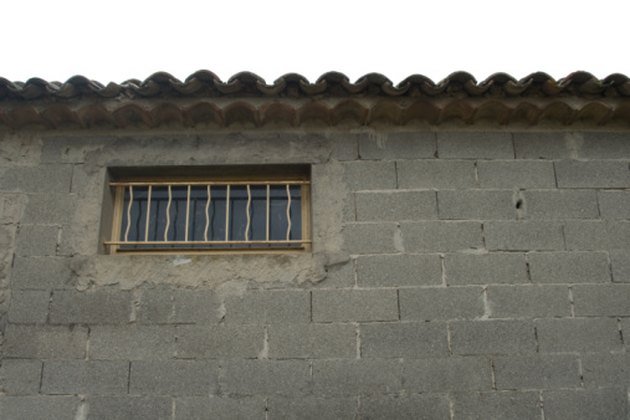
2 Answers from MyBuilder Extension Builders
Repairing Cracks In Thermalite Blocks Sizes At Home Depot
Best Answer
24896Thermalite blocks are prone to shrinkage. so long as the blocks dont appear on the outside walls this is probably the cause. British Gyprum only recommend boarding on thermalite as opposed to wet plaster because of this. Fill the cracks with a weak mortar and board over using dot and dab.
2013-06-01T16:05:02+01:00Answered 1st Jun 2013
24890thermalite blocks always crack. I personally wont use them, I use toplite. If you are dot and dab probably be ok
2013-06-01T16:05:02+01:00Repairing Cracks In Thermalite Blocks Sizes Concrete
Answered 1st Jun 2013
Related Questions
Thermalite Blocks Price
- Victorian solid brick walls-cement and sand or lime render on internal wall
Our Victorian end terraced house that we moved into in November last year had soaking damp walls which we removed (the plaster...
- Is lime plaster advisable on internal walls separating rooms or only need on external and party
I’m getting damp blown plastered replaced with lime in 1880s mid terrace but the walls between bedroom and bathroom seam fine....
- Advice needed - Main Walls Issue on Home Buyer Report
My boyfriend and I are looking to buy our first home and it is an old victorian end-terrace cottage (built 1890) and the house...
- Ytong Internal block wall questions
Hi We will be building an outbuilding consisting of blocks with cavity walls. the external wall will be concrete blocks whilst...