- Datedif Function Excel For Mac 2016 Manual
- Microsoft Excel For Mac
- How To Get Datedif Function In Excel
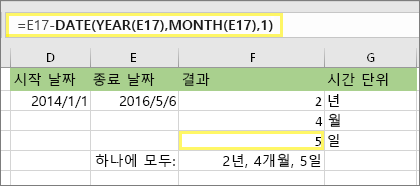
I note that in 2016, although there is no prompt at the function wizard, once the dialog box opens, you can select Help and it brings up a Help screen which also states Applies To: Excel 2016, Excel 2013, Excel 2010, Excel 2007, Excel 2016 for Mac, Excel for Mac 2011, Excel Online, SharePoint Server 2010, SharePoint Foundation 2010, Excel. It has been officially recognised and introduced by Microsoft in Excel 2016 and is present in Help also. It doesn't appear in Insert Function list though. Hence, it doesn't pop up the syntax of DATEDIF if DATEDIF is written. OP needs to write the complete syntax of DATEDIF to make this workable. Instructions in this article apply to Excel 2019, 2016, 2013, 2010, 2007; Excel for Microsoft 365, Excel Online, and Excel for Mac. Build the Excel IF Statement When using the IF, AND, and OR functions, one or all of the conditions must be true for the function to return a TRUE response. Important note: the DATEDIF function returns the number of complete days, months or years. This may give unexpected results when the day/month number of the second date is lower than the day/month number of the first date. See the example below. The difference is 6 years. Use the following formula to return 7 years.
The english function name DATEDIF() has been translated into 15 languages. For all other languages, the english function name is used. There are some differences between the translations in different versions of Excel.
Availability
| Excel Versions | Availability | Category |
|---|---|---|
| Excel (Office 365) | Yes | Hidden |
| Excel 2013 | Yes | Hidden |
| Excel 2010 | Yes | Hidden |
| Excel 2007 | Yes | Hidden |
| Excel 2003 | Yes | Hidden |
Datedif Function Excel For Mac 2016 Manual
Reference language
| Language | Designation |
|---|---|
| English | DATEDIF |
Translations
| Language | Designation |
|---|---|
| Basque | DATADIF |
| Catalan | DIFDATA |
| Danish | DATO.FORSKEL |
| Dutch | DATUMVERSCHIL |
| Finnish | PVMERO |
| Galician | DATADIF |
| Hungarian | DÁTUMTÓLIG |
| Italian | DATA.DIFF |
| Norwegian | DATODIFF |
| Polish | DATA.RÓŻNICA |
| Portuguese, Brazil | DATADIF |
| Portuguese, Portugal | DATADIF |
| Russian | РАЗНДАТ |
| Spanish | SIFECHA |
| Turkish | ETARİHLİ |
Links to the Microsoft Online Help for the function DATEDIF()
Microsoft Excel For Mac
Note: Microsoft is currently updating the links and contents for the Excel online help. Therefore, some of the following links may not work as expected and lead to an error page. The links will on this site will be updated as soon as possible.
| Language | |||
|---|---|---|---|
| Arabic | Finnish | Kazakh | Russian |
| Basque | French | Konkani | Serbian |
| Bulgarian | Galician | Korean | Slovak |
| Catalan | German | Latvian | Slovenian |
| Chinese - Simplified | Greek | Lithuanian | Spanish |
| Chinese - Traditional | Gujarati | Malaysian | Swedish |
| Croatian | Hebrew | Marathi | Thai |
| Czech | Hindi | Norwegian | Turkish |
| Danish | Hungarian | Polish | Ukrainian |
| Dutch | Indonesian | Portuguese, Brazil | Vietnamese |
| English | Italian | Portuguese, Portugal | - |
| Estonian | Japanese | Romanian | - |
How To Get Datedif Function In Excel
DATEDIF Worksheetfunction
The information from this page is a part of the 'Excel Function Bible' add-in created by
Norman Harker in association with Ron de Bruin.
Description
Calculates the number of days, months, or years between two dates.
Classification, Source, History
Classification - Date And Time > Date And Time Calculations.
Microsoft sources have said that it was incorporated to ensure compatibility with Lotus 1-2-3.
Built in.
Mysteriously omitted from smart tip entry system. Has only had a Help file in Excel 2000. but the help file is online if you want to see it :
Comment
This is NOT an Analysis ToolPak function. It does exist. It is not a figment of your imagination. In some situations it is very useful.
Be aware that it does have ideosyncracies and there are significant bugs. Use with caution and ensure that all mission critical uses are thoroughly checked against known issues.
Dates in Excel are specially formatted numbers which Excel stores as numbers but which are displayed in some form of date representation.
Although the date serial number system seems obscure, it does fascilitate easy calculations involving dates.
The function should not be confused with the DATEDIFF function in VBA.
Syntax:
=DATEDIF(start_date,end_date,unit)
Arguments:
Name Type Description Argument Notes
start_date Required A date that represents the first, or starting, date of the period for which you want the difference. 'Dates may be entered as:
a. text strings within quotation marks (for example, '2001/1/30'),
b. serial numbers (for example, 36921, or
c. the results of other formulas or functions (for example, DATEVALUE('2001/1/30'))
But note that if the date includes a time portion (a decimal part), DATEDIF truncates it.'
end_date Required A date that represents the second, or end, date of the period for which you want the difference. 'Dates may be entered as:
a. text strings within quotation marks (for example, '2001/1/30'),
b. serial numbers (for example, 36921, or
c. the results of other formulas or functions (for example, DATEVALUE('2001/1/30'))
But note that if the date includes a time portion (a decimal part), DATEDIF truncates it.'
unit Required 'Unit is the type of information you want returned.
'y' The number of complete years in the period.
'm' The number of complete months in the period.
'd' The number of days in the period.
'md' The difference between the days in start_date and end_date. The months and years of the dates are ignored.
'ym' The difference between the months in start_date and end_date. The days and years of the dates are ignored.
'yd' The difference between the days of start_date and end_date. The years of the dates are ignored.' 'Unit requirements may be entered as
a. text strings in inverted commas or
b. as references to cells containing those strings (without inverted commas), or
c. as formulas returning those strings (without inverted commas).
The unit requirements are not case sensitive.'
Related / Similar And Frequently Used With Functions
Related / Similar
DAYS Returns the number of days between two dates.
NETWORKDAYS Returns the number of whole working days between two dates excluding (if provided) specified holidays.
NETWORKDAYS.INTL Returns the number of whole working days between two dates allowing weekend day choice and excluding (if provided) specified holidays.
YEARFRAC Returns the number of years and fractions of a year between two dates.
Frequently Used With
DATE Returns the Excel date / time serial number that represents a particular date.
Examples Using DATE Function
Index of Examples
Example 1:- Simple Entry Of DATEDIF Function Unit = 'd'
Example 2:- Simple Entry Of DATEDIF Function Unit = 'm'
Example 3:- Simple Entry Of DATEDIF Function Unit = 'y'
Example 4:- Simple Entry Of DATEDIF Function Unit = 'md'
Example 5:- Simple Entry Of DATEDIF Function Unit = 'ym'
Example 6:- Simple Entry Of DATEDIF Function Unit = 'yd'
a. The formula:
b. Proof of errors using 'yd'
c. Method of avoiding error.
Example 7:- Application Using DATEDIF Function: Eight Approaches To Calculating Age
a. Age in completed years:
b. Age in completed months:
c. Age in completed days:
d. Age in years and completed months:
e. Age in years and days:
f. Age in years, weeks, and days:
g. Age in years and fractions of a year:
h. Age in years, months and days:
Errors Using DATEDIF function
Date entry strings are subject to error because:
a. The month names don’t translate between different languages.
b. Regional Option setting translate entries differently. (e.g.) 03-08-2003 is 08-Mar-2003 in English (US) setting but is 03-Aug-2003 in English (UK) setting;
c. Double digit years may be interpreted differently. (e.g.) 03-08-03 is in 1903 or 2003 depending upon double digit year interpretation setting.
The solution to date entry string errors is to avoid them by either:
a. Entering dates in cells which are validity checked for dates and to refer to those cells. OR
b. Using the DATE function to enter the start_date and end_date arguments.
DATEDIF does not allow a negative calculation to be returned. Thus the first date argument must be an earlier date than the second one.
#VALUE! Is returned if start_date or end_date arguments are not recognised by DATEDIF as valid dates Be aware that the date validity algorithm of DATEDIF and Excel generally is different.
#NUM!: is returned if
the start_date is a later date than the end_date
the unit argument is not a valid unit argument
Function Bug: Where unit argument is 'yd' there are errors if the start_date and end_date span a Leap Year day.
This can be a significant issue and we recommend avoidance of 'yd' agrument and favour the formula provided in Example 6 above.