Note: This article was originally published on 13 July. I have made modifications on 17 July.
With the last five characters of Office 2016 product key, you can match it up with the product keys find from the Microsoft account page, so you won't make it wrong. You also can check the full product keys with the VBScript code. To check Office product key with VBScript code. Type the VBScript code to a notepad, and save it as a.vbs file.
The big announcement from Microsoft last Thursday was Office 2016 for Mac is here! Ed Bott has a glowing review at New Office 2016 for Mac makes life easier for the cross-platform crowd.
We’ve known for months that Microsoft has been working on Office 2016 for both Windows and Mac. I’ve been playing a bit with the Office 2016 for Windows preview for a while, but I haven’t done much with the Mac preview.
Highlights
Mac Office 2016 User Interface
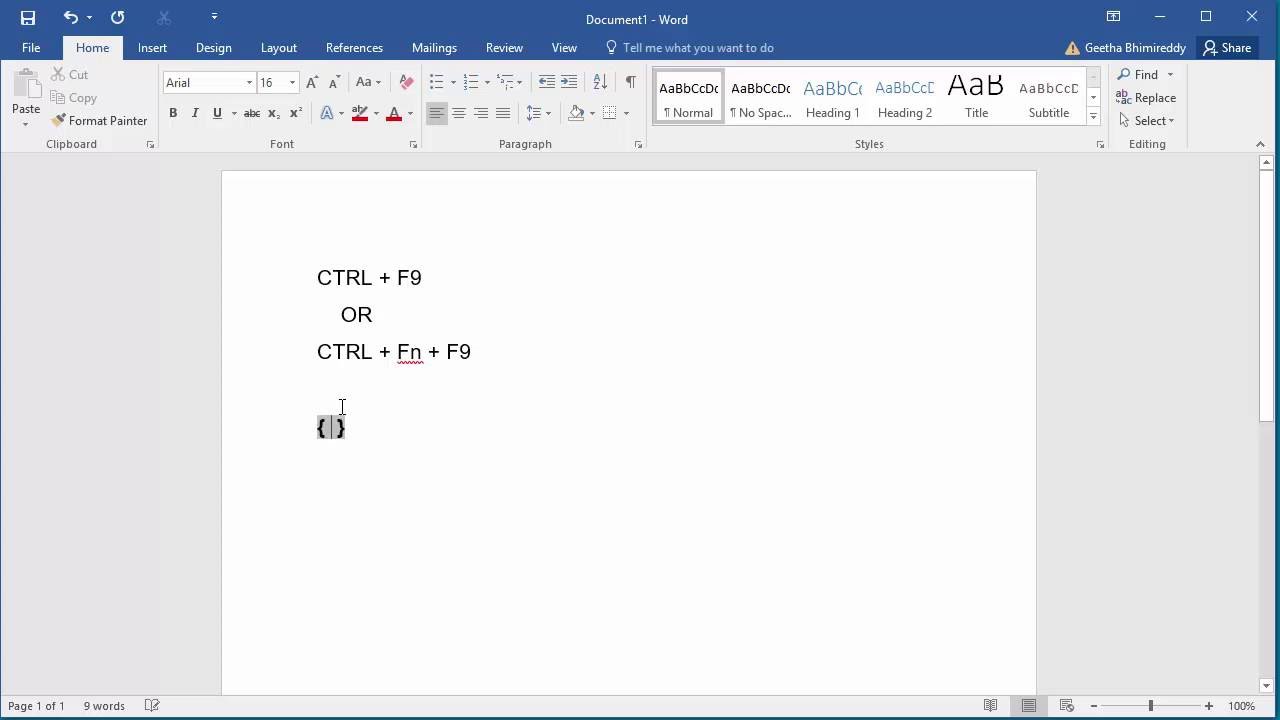
- Reveal Formatting The feature commonly touted as Word's equivalent to Reveal Codes in earlier versions was the “What's This?” button on the Help menu. Click on that (or press Shift+F1), then click in a paragraph, and you'd get information about formatting applied both by the style and directly.
- This is a application-specific API model that was introduced with Word 2016. It's a strongly-typed object model that you can use to create Word add-ins that target Word 2016 on Mac and Windows. This object model uses promises and provides access to Word-specific objects like body, content controls, inline pictures, and paragraphs.
- Word for Microsoft 365 for Mac Word 2019 for Mac Word 2016 for Mac More. Less Let's say you want to use different page numbers or number formats and styles in different parts of your document.
- Thanks for the tip. I been complaining since at least the turn of the century about the lack of reveal codes on Word. The WP reveal codes easily allowed the user to fix formatting problems, usually by just deleting unwanted formatting by a backspace or two with the cursor.
The Office 2016 for Mac user interface is very much like that for Office for Windows. It no longer feels like a toy program built by an 8th grader in shop class. This is a very good sign. Now Office looks and feels the same across all platforms: Windows, Mac, Android, iOS.
New Charts (Windows only, so far)
Earlier, Microsoft Introduc[ed] new and modern chart types now available in Office 2016 Preview. The latest Office 2016 preview features a few new chart types, including some that were previously only available to users of add-ins like the Peltier Tech Charts for Excel. Microsoft has added waterfalls, histograms, paretos, treemaps, and sunbursts.
Lowlights
Office 365
The Windows Office 2016 preview has only been available through Office 365 (the kludgy online subscription service). I never can remember which of my umpteen Microsoft logins is valid for Office 365, and even when I look it up, the correct user ID and password don’t work the first time. Updating Windows Office 2016 preview versions has never gone without several major hitches for me, followed by complete uninstallation then reinstallation from scratch.
So far, Mac Office 2016 is only available via Office 365, which Microsoft treats as a good thing. In Windows, installing from Office 365 wipes out any older versions of Office, so you can’t run Office 2007, 2010, and 2013 side-by-side to support different clients. On the Mac, I was glad to see that I could install Office 2016 without wiping out the previously installed Office 2011. I did have to rebuild the LaunchPad links to Office 2011 and put the icons back onto the Dock, but that only wasted an hour.
Mac Office 2016 VBA
This is the painful one. Mac Office 2016 does still support VBA, of course, and Microsoft has rebuilt the VBA Editor from scratch, which was drastically. Unfortunately the VBA Editor is not really ready to use: you can’t insert new modules or UserForms, and while you can edit existing modules, you can’t even view the UserForms.
Microsoft is making small improvements to the VB editor, and these improvements will be part of the monthly updates. but they are not expecting to make the editor as functional as that in Windows. They encourage developers to build their add-ins in Windows versions of Excel or in Excel 2011, then test in Mac Excel 2016.
Mac Office 2016 Custom User Interface Elements
First, a little background…
In Office 2003 and earlier, developers and users could construct custom menus and toolbars to access built-in and custom functionality.
Starting in Office 2007, Office for Windows has had the ribbon. It could readily be modified for developers willing to delve into RibbonX, a variation of XML used to control and customize the ribbon. Since Office 2010, the ribbon could also be easily modified through the user interface. While custom menus and toolbars were no longer supported in Office 2007, any custom menu items were put into a special Add-Ins ribbon tab. Windows Office add-in developers, myself included, have migrated to custom ribbon interfaces, to great effect.
Mac Office 2011 introduced a low-functioning ribbon, which did not allow any customization programmatically or through the Office interface. However, the custom menus and toolbars that were discontinued in Windows Office are still supported in Mac Office 2011.
Mac Office 2016 has a better ribbon than 2011, but it is still not customizable by the user, nor can it be it controlled using RibbonX. Custom menus and toolbars are no longer supported in Mac Office 2016, but there is an Add-Ins ribbon tab to handle legacy menu items.
Microsoft is working on implementing RibbonX interface controls for Mac Excel, and it will be rolled out as part of a regular update. Until then a Mac Office add-in developer should still build legacy menu-type user interfaces.
Sandbox Mode
One more drawback is that Mac Office 2016 now runs in a sandboxed mode, so certain features are more difficult for developers to implement, features such as accessing folders and opening files. I don’t know the full ramifications of this behavior, since my code isn’t yet running properly in Mac Office 2016.
Bottom Line
Therefore, if you are using any add-ins to extend the features of Mac Office, you should not upgrade until you know whether these add-ins will work properly in Mac Excel 2016.
Peltier Tech Charts
Peltier Tech Chart Utility 2.0
Peltier Tech has taken steps to prepare for Microsoft Office 2016. The Windows version of the current Peltier Tech Chart Utility was designed for Office 2007 through 2013, and it can to run in the preview of Office 2016, but it will not work in the eventual commercial release of Office 2016. As always, there are a few minor changes that need to be made to accommodate new features and syntax of the new Office version.
Peltier Tech Charts for Excel 3.0
In addition, Peltier Tech is working on a major upgrade to the utility, called Peltier Tech Charts for Excel. This edition will work in Windows Office 2016, but also 2013, 2010, and 2007. It will also run in Mac Office 2016, when that has become capable of supporting add-ins, and of course, it will run in Mac Office 2011. The exciting part is that the same add-in file will work in both Windows and Mac, so users stuck between platforms will not need to license two separate add-ins.
The new Peltier Tech Utility will feature all of the old charts, including the ones that Microsoft is introducing in Office 2016, because some Peltier Tech customers will still be using older Office versions. New chart types are being developed, including grouped box plots and sensitivity tornado charts. If you have a favorite chart type that neither Microsoft nor I have made available, mention it in the comments below, and Peltier Tech will add it to the long long list of suggestions.
The new Utility will also offer some new features, including more powerful chart data manipulation tools. Again, if there’s a feature you can’t live without, let us know in the comments.
The new Utility will likely have Standard and Advanced editions like the current Utility, and these editions will likely be priced at the same levels as the current utility. Existing users of the current Utility will be able to upgrade at a 50% discount, and users of the older family of utilities will qualify for a 25% discount. In addition, bulk and academic discounts will be available.
Another exciting development is Peltier Tech Charts for PowerPoint, and in all likelihood Peltier Tech Charts for Word. These are still now in their infancy, but it will bring easier linking of standard PowerPoint and Word charts to Excel data, as well as at least a partial menu of Peltier Tech custom charts.
Peltier Tech Charts for Excel 3.0 Beta
So far the new utility is only in the alpha testing stage, meaning new pieces are being incorporated and tested in-house only.
In about a month a beta version will become available. Current and potential new users will be able to test and comment on it.
During the beta testing period, users of the current Utility will be able to lock in their upgrade at a discount of 60%, users of the older family of utilities at 35%, and new users at a discount of 10%.
More details will become available over the coming weeks.
If the Word document contains a font that is not installed or not compatible on the system, or if the Word document is corrupted, or if the Word documents being transferred over internet being have been edited on multiple platforms/systems, the Word file may open with weird symbols or gibberish. To address this problem, you can use effective methods below. Besides, if you have Word loss, you can use the highly recommended file recovery software to restore files with ease.
Have you encountered Word file suddenly corrupted and was opened with random codes or data turned into wired symbols or gibberish? Is it possible to repair and recover gibberish Word files? How to fix corrupted Word files turned into unreadable symbols? If you are facing with Word document changed to symbols but found no way to troubleshoot, you can try the solutions in this article to fix the issue. Meanwhile, data recovery software is recommended to help you recover corrupted and lost Word document most effectively!
| Workable Solutions | Step-by-step Troubleshooting |
|---|---|
| Fix 1. Solutions to weird symbols | 4 quick fixes for Word Document Open with Weird Symbols. For instance, use fonts that are mostly used...Full steps |
| Fix 2. Repair with Microsoft Office | Click the Microsoft Office Button, and then click 'Open'. In the Open dialog box, click your Word document...Full steps |
| Fix 3. Restore from Previous Version | Right-click the corrupted/damaged Word files and select 'Restore previous version'...Full steps |
| Fix 4. Recover Word with a tool | If you can't restore the corrupted Word anyway, you can use EaseUS Data Recovery Wizard. ...Full steps |
Quick Fixes for Word Document Open with Weird Symbols
Before you repair and restore the corrupted Word files, you can first try the following simple tips to fix the issue.
1. Use fonts that are mostly used on most computers, like Arial and Times Roman.
2. Install the required font by dragging it into 'Library' > 'Fonts' on your computer.
3. Enable Font Book on Mac in the Applications folder.
4. Substitute a new compatible font in Word.
How to Repair/Restore Word Document Turned into Symbols/Gibberish
To repair and restore corrupted Word document with weird symbols, here are two possible methods.
Method 1. Repair Corrupted Word Files Showing Gibberish with Microsoft Office
Step 1. Click the Microsoft Office Button, and then click 'Open'.
Step 2. In the Open dialog box, click your Word document.
Step 3. Click the arrow on the Open button, and then click 'Open and Repair'.
Step 4. Verify that repairing the document fixes the problem and the strange behavior no longer occurs.
Method 2. Restore Word Files Open with Wired Symbols from Previous Version
Step 1.Right-click the corrupted/damaged Word files and select 'Restore previous version'.
Step 2. Find an earlier version of the damaged or corrupted Word file, and click 'Restore'.
Step 3. Run Word and open the restored Word file again, click 'OK' when a message pops up to warn that some text layers contain fonts are missing.
Step 4. Check all layers and remark the lost part with layers and save them as a new Word file.
Reveal Codes In Word 2016 For Mac Download
Method 3. Recover Word Document with a File Recovery Tool
Download Word 2016 For Mac
If you can't restore the corrupted Word document from previous versions, there is still another useful way to make it by using EaseUS Data Recovery Wizard. This data recovery program enables you to restore the corrupted Word document opening with wired symbols in the easiest way.
EaseUS data recovery software will help you recover lost Word document due to mistaken deletion, system/application crash, virus attack, storage device formatting/damage, and more. And you can recover data from external hard drive, emptied recycle bin, hard drive, memory card, flash drive, digital camera, and camcorder on all Windows and macOS computers.
Now, download and use this software to restore Word document opens with random codes or unreadable symbol by following the steps below.
Step 1. Choose the Word file location.
Do you know where you lost Word files? Choose the hard disk drive or a specific folder and click the San button. If it's on a USB flash drive or SD card, take one more step to connect it to your computer.
Step 2. Scan all lost data.
The software will start immediately scanning all lost data on the selected drive, and you'll see more and more data showing up in the scan results. After the scan, use the quickest way to the wanted Word documents by choosing 'Documents' from the drop-down list in 'Filter'.
Step 3. Select Word files and recover.
Microsoft 2016 For Mac
You're allowed to preview a Word file if you have Microsoft Word application installed on your computer. Finally, select the desired documents and click 'Recover'.